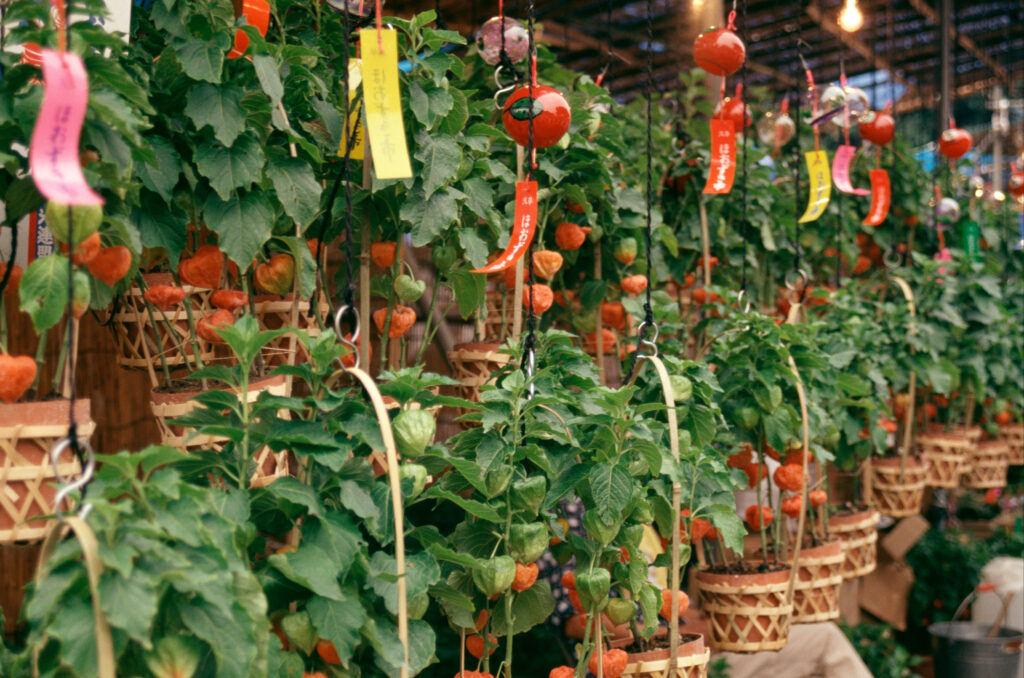
Asakusa Senso-ji Hozuki Market
The Hozuki Market (Hozuki Ichi) at Senso-ji Temple is a traditional summer event held annually on July 9th and 10th. This market takes place in the grounds of Senso-ji Temple, where vibrant hozuki (Chinese lantern plants) are sold to visitors. Here are some detailed insights into the Hozuki Market.
1. History and Origin
The history of the Hozuki Market dates back to the Edo period. It was believed that visiting Senso-ji Temple on July 10th, a day associated with the temple’s main deity Kannon Bodhisattva, would bring the equivalent blessings of visiting the temple for 46,000 days. This belief attracted many worshippers, leading to the establishment of the market. The tradition of selling hozuki plants started in the Meiji period.
2. Significance of Hozuki
Hozuki, also known as Chinese lantern plants, are notable for their bright red fruit. The fruit resembles a small lantern, which is why it is called “hozuki” (meaning “demon lantern”). Hozuki are also believed to ward off evil spirits and bring good health, making them popular among visitors.
3. Market Atmosphere
During the Hozuki Market, the grounds of Senso-ji Temple are adorned with colorful hozuki plants. Over 100 stalls line the area, selling hozuki potted plants, wind chimes, traditional sweets, and more. The temple grounds are also decorated with lanterns and Tanabata (Star Festival) decorations, enhancing the festive atmosphere.
4. Special Blessings Day
July 9th and 10th are known as “Shimanrokusen-nichi,” days when visiting the temple is believed to confer the blessings of 46,000 visits. Especially on the 10th, known as “Kōtoku Day,” a special prayer service is held at the main hall of Senso-ji Temple, drawing many worshippers.
5. Tourist Attractions
In addition to hozuki plants, the market offers various traditional crafts and foods. Popular items include traditional Edo-period crafts and summer-themed items like wind chimes. During the market days, the temple grounds are bustling with visitors, creating a lively and vibrant atmosphere.
6. Cultural Experience
The Hozuki Market is one of Asakusa’s iconic summer events. Visiting this market allows one to experience the depth of Japanese tradition and spirituality. Exploring the market provides an opportunity to delve into the history and customs of Asakusa, enriching the overall travel experience.
Conclusion
The Hozuki Market at Senso-ji Temple is a blend of history and culture, representing a traditional summer event. By visiting this market, you can enjoy the vibrant beauty of hozuki plants and experience the enduring traditions of Japan dating back to the Edo period. If you visit Asakusa in the summer, be sure to experience the charm of the Hozuki Market.
浅草寺のほおずき市(ほおずきいち)は、毎年7月9日と10日に開催される伝統的な夏の風物詩です。この市は、浅草寺の境内で行われ、訪れる人々に鮮やかなほおずきの鉢植えが売られます。以下は、ほおずき市に関する詳細な情報です。
浅草寺 ほおずき市の概要
1. 歴史と由来
ほおずき市の歴史は江戸時代にさかのぼります。当時、浅草寺の本尊である観音菩薩の縁日とされる7月10日に参拝すると、4万6千日分のご利益があると信じられていました。このため、多くの参拝者がこの日に訪れるようになり、次第に市が開かれるようになりました。ほおずきの鉢植えが売られるようになったのは、明治時代からとされています。
2. ほおずきの意味
ほおずき(鬼灯、酸漿)は、その鮮やかな赤い実が特徴です。この実は提灯のような形をしており、灯りを灯す提灯に見立てて「鬼灯」と呼ばれます。また、ほおずきは魔除けや健康祈願の意味もあり、古くから親しまれてきました。
3. 市の雰囲気
ほおずき市の期間中、浅草寺の境内は色とりどりのほおずきで彩られます。約100以上の露店が立ち並び、ほおずきの鉢植えや風鈴、和菓子などが販売されます。境内には提灯や七夕飾りも飾られ、祭りの雰囲気を一層盛り上げます。
4. 特別なご利益の日
7月9日と10日は、「四万六千日」と呼ばれ、この日に参拝すると通常の4万6千日分のご利益があるとされています。特に10日は「功徳日」とされ、参拝者が多く訪れます。この特別な日には、浅草寺の本堂で特別な祈祷が行われます。
5. 観光の見どころ
ほおずき市では、ほおずきの鉢植えだけでなく、さまざまな伝統工芸品や食品も販売されます。特に、江戸時代から続く伝統的な工芸品や、夏らしい涼を感じる風鈴などが人気です。市の期間中は、多くの人々で賑わい、浅草寺全体が活気にあふれます。
6. 文化体験
ほおずき市は、浅草の夏を象徴するイベントの一つです。この市を訪れることで、日本の伝統文化や信仰の深さを体感することができます。また、市を散策しながら、浅草の歴史や風習に触れることで、より深い観光体験が得られるでしょう。
まとめ
浅草寺のほおずき市は、歴史と文化が融合した夏の伝統行事です。この市を訪れることで、色鮮やかなほおずきの美しさと、江戸時代から続く日本の伝統文化を楽しむことができます。夏の浅草を訪れる際には、ぜひほおずき市を体験し、その魅力を堪能してください。
浅草浅草寺保月市场
每年 7 月 9 日和 10 日,浅草寺都会举办传统的夏季活动 “灯笼市场”(Hozuki Ichi)。该市场在千相寺院内举行,向游客出售生机勃勃的灯笼草。以下是关于灯笼市场的一些详细介绍。
- 历史和起源
宝月市场的历史可追溯到江户时代。当时人们认为,在 7 月 10 日这一天参拜千相寺的主神观音菩萨,会带来相当于参拜寺庙 46000 天的祝福。这种信仰吸引了许多信徒,从而促成了市场的建立。销售柚木的传统始于明治时期。
- 枳椇树的意义
Hozuki 又称中国灯笼草,以其鲜红色的果实而闻名。果实像一个小灯笼,因此被称为 “葫月”(意为 “妖灯”)。人们还认为 Hozuki 可以辟邪,带来健康,因此深受游客喜爱。
- 市场氛围
在 “锄月集市 ”期间,浅草寺的庭院被五颜六色的锄月植物所点缀。这里有 100 多个摊位,出售筥崎盆栽、风铃、传统甜点等。寺院内还点缀着灯笼和七夕(星星节)装饰品,烘托出浓浓的节日气氛。
- 特别祈福日
7 月 9 日和 10 日被称为 “岛路参拜日”,据说这两天参拜寺庙可以得到 46000 次的祝福。特别是在 10 日,被称为 “光德日”,在浅草寺的本堂会举行特别祈祷仪式,吸引众多信徒前来参拜。
- 旅游景点
除了榉树以外,市场还出售各种传统工艺品和食品。热门商品包括江户时代的传统工艺品和风铃等夏季主题商品。集市期间,寺院内游人如织,热闹非凡。
- 文化体验
保月市场是浅草夏季的标志性活动之一。参观这个市场可以让人体验到日本传统和精神的博大精深。游览市场可以深入了解浅草的历史和风土人情,丰富整个旅游体验。
总结
浅草寺的保月市场融合了历史和文化,是传统的夏季活动。通过游览这个市场,您可以欣赏到充满生机的柚木植物之美,还可以体验到可追溯到江户时代的日本悠久传统。如果您在夏季前往浅草,一定要体验一下锄月市场的魅力。